
If a Brazilian company sold you a defective product, a misleading service or an abusive contract, your rights come from Brazilian law, not from the law where you live now. The most direct route is a Brazilian lawyer who works in your language and can act for you without your traveling. At Marques Lima Advogados you deal directly with the senior attorney, online, in English or Portuguese. Note that we practice Brazilian law only: we do not advise on US law or appear in US courts.
This guide explains what Brazil’s Consumer Protection Code covers, how a claim moves from complaint to court, what evidence to gather, and the point at which a lawyer makes the difference.
TL;DR
- Brazil’s Consumer Protection Code (CDC, Law 8.078/1990) governs consumer disputes with Brazilian suppliers, including those who sell to people living abroad.
- The official path is a written complaint to the company, then administrative mediation at PROCON, then court. Each step needs documents kept from the start.
- A judge may reverse the burden of proof, so the company must prove its side, but you still need a well-organized file.
- A lawyer matters most when PROCON cannot award damages, when the amount is significant, or when you cannot be in Brazil.
- A Brazilian lawyer can work online, with scope and fee set before engagement.
Table of Contents
- What Brazilian consumer law protects
- Practices that violate consumer rights
- Recent changes worth knowing
- How to pursue a claim, step by step
- A worked example
- When you need a lawyer, and what to look for
- How we can help
- Our perspective
- FAQ
- Sources
What Brazilian consumer law protects
The core statute is the Consumer Protection Code, known as the CDC. It defines a consumer as any person or company that acquires or uses a product or service as the final recipient. A supplier is any public or private party, national or foreign, that produces, imports, exports, distributes or sells products or services.
Consumer protection also sits in the Constitution. According to ICLG’s 2026 Brazil report, it is a fundamental right under Article 5, XXXII, and a principle of the economic order. Around the CDC sit rules on e-commerce contracts, data protection, recalls, customer service and over-indebtedness.
The basic rights in Article 6 of the CDC, in plain terms:
- Protection of life, health and safety against dangerous or harmful products and services.
- Clear, adequate information on quantity, characteristics, composition, quality, taxes and price.
- Protection against misleading or abusive advertising, coercive sales methods and abusive contract clauses.
- Modification of disproportionate contract terms.
- Prevention and reparation of material and moral damages.
- Access to administrative and judicial bodies, with easier defense for the consumer, including reversal of the burden of proof.
- Responsible credit practices and treatment of over-indebtedness, added by Law 14.181/2021.
The ordinary consumer rule has a limit worth knowing. A company that buys goods to resell or use as an input in its own business is generally not a “final recipient” in the CDC’s sense, so a commercial import deal is usually handled as a contract dispute rather than a consumer claim. If you import for your business, a lawyer should classify the transaction before you choose a strategy.
Practices that violate consumer rights
The CDC names specific conduct. Article 37 prohibits misleading or abusive advertising, including information that is false or that misleads by omission about nature, quality, quantity, origin or price. Article 38 puts the burden of proving that an ad is truthful on whoever sponsors it. Article 39 lists abusive supplier practices, and Article 66 makes a false or misleading statement, or the omission of relevant information about a product or service, a crime punishable by detention of three months to one year plus a fine.
Two liability rules matter for product and service defects:
- Under Article 12, the manufacturer, producer, builder and importer, Brazilian or foreign, answer regardless of fault for damage caused by defects in design, manufacture, assembly, packaging or by inadequate information on use and risks. They escape liability only by proving they did not place the product on the market, that no defect exists, or that the consumer or a third party was solely at fault.
- Under Article 14, service providers answer regardless of fault for damage from defective services. A service is defective when it does not offer the safety a consumer can reasonably expect. Liberal professionals, such as doctors and lawyers, are the exception: their personal liability depends on proof of fault.
Common real-world cases for our readers include a developer or seller who misdescribed a property, a bank or card issuer that hid the total cost of credit, a telecom or airline that did not honor an offer, and an online store that never delivered. If the other side is a foreign manufacturer facing claims in Brazil, our guide to product liability in Brazil for foreign manufacturers covers that angle.
Recent changes worth knowing
Consumer rules in Brazil are updated often. Three recent developments stand out.
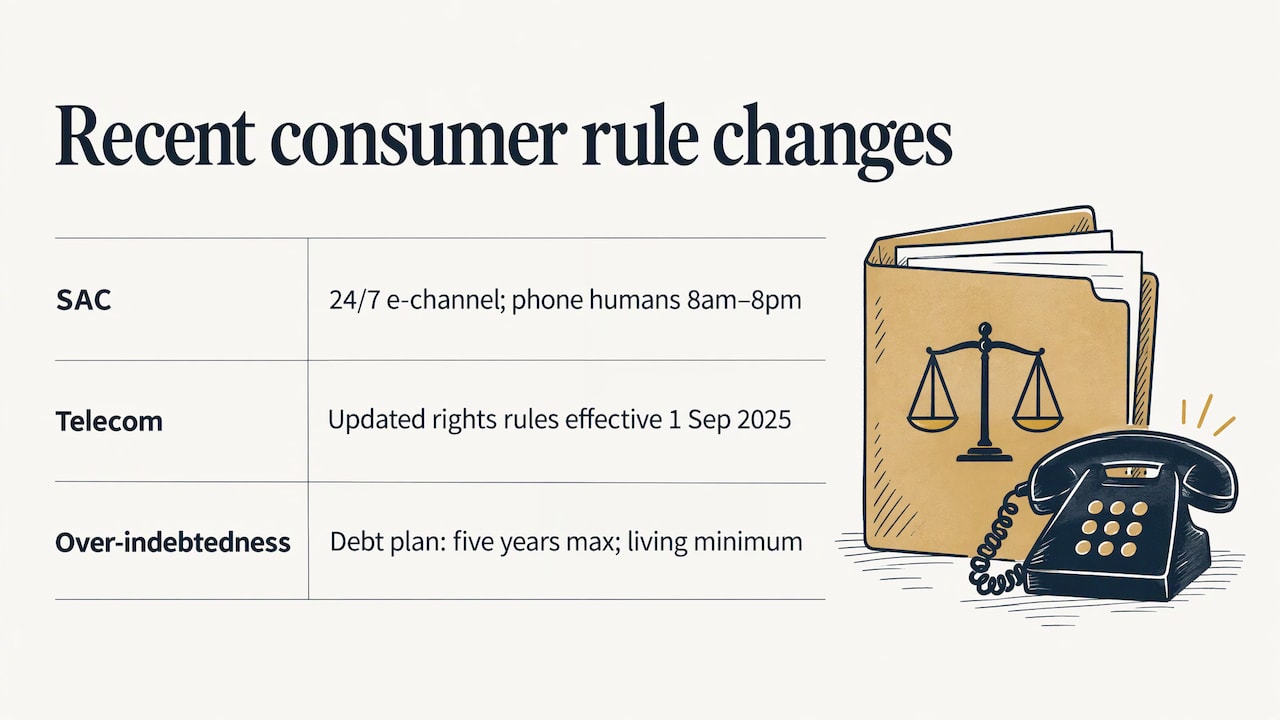
Customer service (SAC). The Ministry of Justice announced Decree 13.135 of 9 October 2026, published on 13 October 2026. It replaces Decree 11.034/2022 and takes effect 20 days after publication. According to the decree’s text, covered suppliers must offer at least one widely publicized electronic channel available 24/7, with real-time human attendance from 8am to 8pm, seven days a week. Telephone attendance is also mandatory, with human service in the same hours and immediately in emergencies. The decree applies to suppliers in federally regulated sectors and to financial, payment and credit services offered through digital platforms regulated by the Central Bank of Brazil. Keep protocol numbers from every contact, since they prove you used these channels.
Telecom. Anatel states that the updated General Regulation of Rights of Telecommunications Service Consumers entered into force on 1 September 2025, replacing the earlier Resolution 632 framework.
Over-indebtedness. The 2026 edition of the CDC published by PROCON-SP includes the chapter added by Law 14.181/2021. Credit providers must disclose, at the time of the offer, the total effective cost, the effective monthly interest rate, late-payment charges and installment amounts. An over-indebted consumer acting in good faith can ask a court for a debt renegotiation with all creditors at one hearing, with a payment plan of up to five years that preserves a minimum amount for living expenses.
How to pursue a claim, step by step
The Ministry of Justice’s Foreign Consumer Guide describes an escalation. Here it is, with what each stage demands and where claims commonly go wrong.
1. Complain to the company in writing
Register the complaint in writing, by email, chat or letter, and keep the complaint code. The Ministry advises trying direct resolution first, and using the Consumidor.gov.br negotiation platform if the company is registered there. Note the name and position of whoever receives the complaint when it is made in person.
Where it goes wrong: phone calls without protocol numbers, and complaints that never state what you want (refund, replacement, repair, price reduction).
2. Assemble the evidence
Gather the invoice, purchase order, warranty certificate, contract, payment receipts, advertising screenshots and every message. If the problem involves a digital payment or online trading fraud, preserving technical evidence early matters, and digital fraud investigation services can trace and document transactions in a form usable in proceedings.
Where it goes wrong: ads that were edited or removed after you bought. Capture them with date and URL on the day you see them.
3. File with PROCON
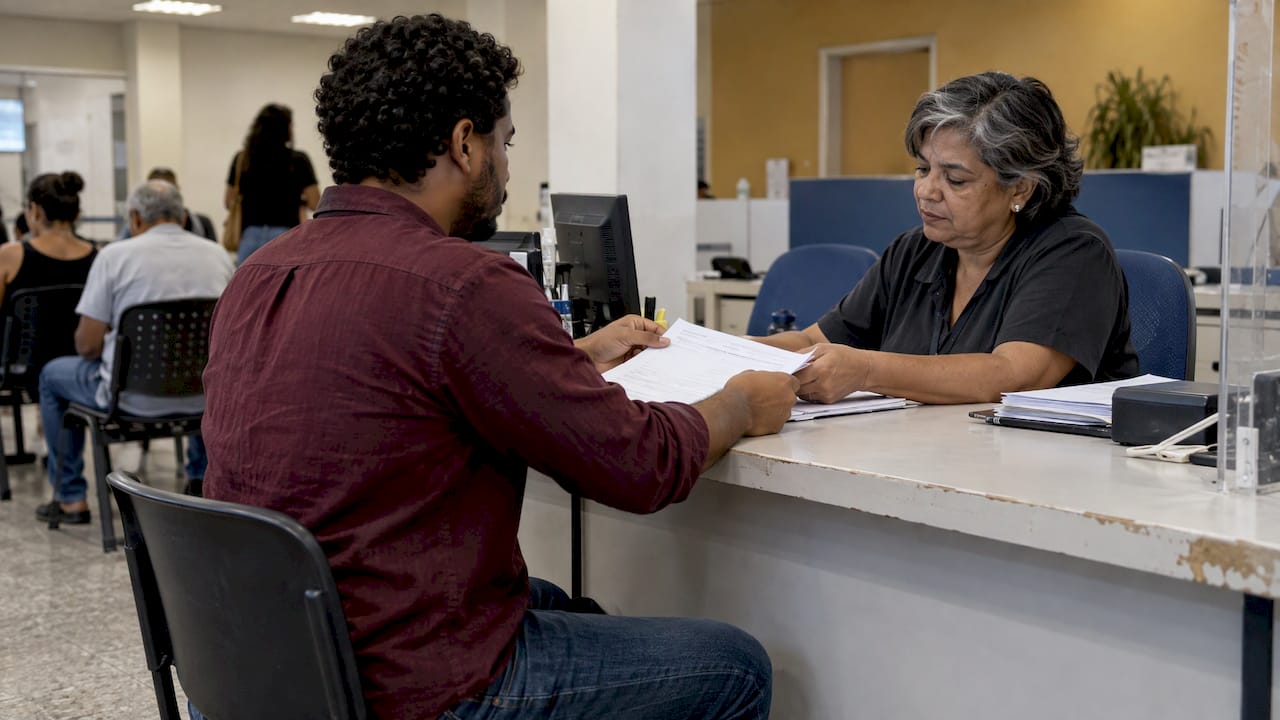
PROCON is the state and municipal consumer protection body. According to PROCON-ES, it can advise on rights, notify suppliers, hold conciliation hearings, inspect establishments, open administrative proceedings and apply fines. Filing there does not stop you from going to court later, because the two are independent. The Ministry guide notes that complaints are made in person, are not anonymous, and that you should keep your original documents. PROCON-GO adds that the complainant must hold the purchase in their name or present a signed power of attorney, and must first have approached the supplier.
For someone living abroad, this is the stage that usually stalls. The in-person format is hard to meet from another country, and the Spanish edition of the guide warns that not every consumer body offers bilingual service and that a process may outlast a visitor’s stay. A power of attorney to a Brazilian lawyer solves the practical problem.
4. Go to court
PROCON cannot award moral or material damages or replace a judge, and it sends unresolved disputes to the Judiciary, as PROCON-ES explains. The Ministry guide says claims up to 40 minimum wages may go to Small Claims Court, while larger ones follow regular channels. At the judge’s discretion the burden of proof can be reversed under Articles 6, VIII and 38, so the company must prove its case instead of you. That helps, but a judge decides case by case, so a complete file is still your best position.
Group harm can be pursued by the organizations listed in Article 81 of the CDC, not by an individual alone.
A worked example
Imagine a US-based Brazilian citizen who paid a deposit on a furnished apartment advertised online as having a sea view and a parking space. The deed shows neither. Their file would include the original ad screenshots, the contract, the payment receipts and the seller’s emails. Under Articles 37 and 38, the advertiser must prove the ad was truthful. A written complaint to the seller comes first, then a PROCON filing handled through a power of attorney, then a lawsuit seeking price reduction or cancellation with refund, and possibly damages. Whether the sale was a consumer relation or an ordinary sale between individuals is the first question a lawyer answers, because it decides which rules apply.
When you need a lawyer, and what to look for
The Ministry of Justice guide treats the court stage as the point where a lawyer enters: victims of individual damage seek free legal aid if they cannot afford a lawyer, or hire one at their discretion. If you live abroad, the practical triggers are:
- You cannot attend PROCON hearings or court dates in Brazil.
- You want damages, not only a refund.
- The case involves property, credit, a cross-border purchase or a large sum.
- The company ignores written complaints.
- You are the one being charged, and want to know whether the collection practice is lawful. See our guide to collecting from consumers in Brazil.
When choosing counsel, confirm that the lawyer is registered with the Brazilian Bar Association (OAB), that they work with the language you think in, that you speak with the attorney who will handle the case, and that scope and fees are defined in writing before engagement. Make sure the lawyer states clearly that they advise on Brazilian law only, so you do not expect help with a US-side question. Our page on an English-speaking lawyer in Brazil explains how remote representation works, and our practical guide to Brazilian law for foreigners covers the wider picture.
How we can help
We are a Brazilian law firm with offices in Cabo Frio, Rio de Janeiro, and Ithaca, New York, practicing Brazilian law since 2001. Consumer matters sit alongside our work in real estate, inheritance, immigration, debt collection and civil law. Everything is online, in English or Portuguese, with fixed-fee quotes before engagement, and you work directly with the senior attorney. The initial consultation is paid, and it is deductible from later legal fees if you proceed.
To describe your dispute and have the next step mapped out, book through our page for Brazilians abroad and foreigners with matters in Brazil.
Our perspective
Most people who write to us from abroad have already lost months. They called a call center, waited for an email, and were told to appear in person at an office thousands of miles away. The law is rarely the obstacle. The obstacle is distance and a file that was never organized.
What we do is turn the complaint into a clear Brazilian legal position: who the supplier is, which article of the Consumer Code applies, what evidence supports it, and what remedy to ask for. You deal with the attorney who handles the case, in your language, without having to fly to Brazil.
Our 25 years of practice in Brazilian real estate, auctions, inheritance and cross-border matters mean that consumer disputes tied to property, credit or contracts are familiar ground. We quote the fee before you commit, so you know the cost of acting before you act.
Luís
FAQ
What are the basic consumer rights in Brazil?
Article 6 of the CDC lists them: safety, clear information, protection from misleading advertising and abusive clauses, reparation of damages, access to courts and agencies, easier defense including reversal of the burden of proof, and responsible credit. They apply to anyone who buys as a final recipient from a supplier operating in Brazil.
Can I bring a Brazilian consumer claim while living in the US?
Yes. A lawyer in Brazil can file and follow the case with your power of attorney, so you do not need to appear at PROCON in person or travel for the case. Which Brazilian court or body has jurisdiction depends on the supplier and the contract, so it should be reviewed first.
Does a complaint to PROCON stop me from suing?
No. PROCON and the courts are independent, so you can file in both. PROCON can mediate and fine a company, but it cannot award damages, which only a judge can do.
How much does a consumer lawyer in Brazil cost?
It depends on the case. We quote a fixed fee after assessing your matter and before you engage us, and the paid initial consultation is deductible from later fees if you proceed. If you cannot afford a lawyer, the official guide points to free legal aid.
Sources
- Consumer Protection Code, Law 8.078/1990 (Planalto)
- Consumer Protection Laws and Regulations Report 2026, Brazil (ICLG)
- CDC, 2024 edition (PROCON-SP)
- CDC, 2026 edition (PROCON-SP)
- New SAC decree announcement (Ministry of Justice)
- Decree 13.135/2026 (Planalto)
- Telecom consumer rights (Anatel)
- Foreign Consumer Guide (Ministry of Justice)
- Consumer compensation for defective products and services (Ministry of Justice)
- PROCON-ES frequently asked questions
- PROCON-GO FAQ
- Digital fraud investigation services
Recommended
- Brazilian Law for Foreigners: A Practical Guide
- English-Speaking Lawyer in Brazil
- Buying Property in Brazil as a Foreigner: 2026 Guide
Want to get this done in Brazil?
Answer below and I will then help you pick a time for us to talk through your case.