
If your adoption or family case is governed by Brazilian law, you need a lawyer admitted in Brazil, not a US adoption attorney. Brazilian adoption runs through a children’s court, a public prosecutor and a national registry, and a lawyer who works in Portuguese and knows those courts can keep your file moving while you stay abroad. We are a Brazilian firm (OAB/RJ) led by attorney Luis Flavio Marques Lima, practicing Brazilian law since 2001, with online consultations in English or Portuguese. We practice Brazilian law only: we do not handle US adoption courts or advise on US law.
TL;DR
- Brazilian adoption is a court process under the Statute of the Child and Adolescent (ECA), and it is irrevocable once granted.
- Qualification, matching, a monitored period of living together and the final judgment are separate stages, each with its own deadlines.
- If the child and the adopters live in different countries, the adoption is international and follows the 1993 Hague Convention, whatever your nationality.
- Adoption by power of attorney is prohibited, so you take part personally, but a lawyer can prepare and follow the file from abroad.
- Family reunification visas for spouses, children and parents are a different path from adoption and run through consulates and the Federal Police.
Table of Contents
- What a Brazilian adoption lawyer actually does
- Who can adopt and who can be adopted
- The legal steps of a Brazilian adoption
- Adopting from abroad: when it is international
- Family immigration and refugee reunification are not adoption
- Related family questions that cross the border
- How we can help
- Our perspective
- FAQ
- Sources
What a Brazilian adoption lawyer actually does
In the United States, an adoption attorney often works with agencies and private placements. In Brazil the picture is different. Adoption is handled by the Vara da Infância e Juventude, the children’s and youth court, with the Public Prosecutor (Ministério Público) taking part at every stage. The court, not a private agency, decides who is qualified and who is matched with a child.
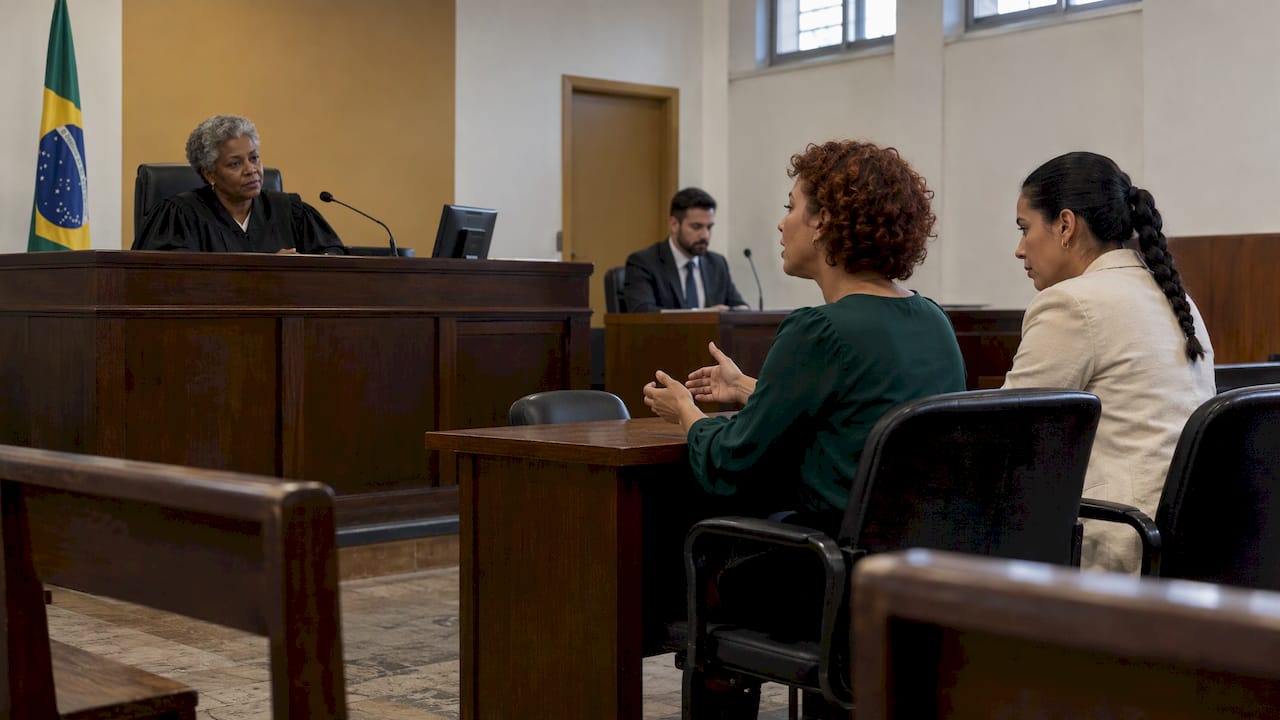
A lawyer is useful in several concrete places. The adoption procedures manual published by the Rio Grande do Sul Public Ministry permits adoption petitions to be filed through a lawyer and requires a lawyer to be appointed for the birth parents at the consent hearing. For international adoptions, the same manual requires the adopters’ personal and direct participation in all acts and proceedings in Brazil.
In practice, a Brazilian attorney can:
- check which documents your file needs and in what form before you file;
- prepare and file the petition and follow the case in Portuguese;
- explain each court notice, hearing and deadline in English;
- coordinate your foreign records, certificates and translations with what the court requires;
- advise on the legal effects afterward, such as the new birth registration, citizenship questions and inheritance rights.
If you also have family, immigration or inheritance questions tied to the same family, the same lawyer can look at them together. You can see how we approach the subject on our page about adoption in Brazil: qualification and living together.
Who can adopt and who can be adopted
The rules sit in the ECA. Anyone over 18 may adopt, regardless of marital status. Joint adoption requires a civil marriage or a stable union with proven family stability. Divorced or separated people can adopt jointly if they agree on custody and visitation, the period of living together began during the relationship, and an affective bond with the adopter who will not hold custody is shown. The Brazilian Ministry of Justice and the National Council of Justice (CNJ) also state a 16-year age difference between adopter and child.
The law treats adoption as an exceptional and irrevocable measure, used only after the options to keep the child in the natural or extended family have been exhausted. That is why you will not simply choose a child. A child becomes available for adoption when, according to the CONSIJ manual:
- the parents are deceased or unknown;
- the parents have lost parental authority by a final judgment; or
- the parents have consented before a judge, with the prosecutor present, a lawyer appointed for them and an express warning that consent cannot be undone.
A child over 12 must also agree, in a hearing.
The Bahia State Court’s adoption guide adds that people over 18 who are already under the adopter’s guardianship can be adopted, and that families residing outside Brazil are among those who may adopt. Adoption by proxy is prohibited, so no one can sign the petition for you through a power of attorney.
The legal steps of a Brazilian adoption
The CNJ publishes a step-by-step guide to adopting in Brazil. The sequence is below, with where files usually stall.
- Petition and documents. You file at the children’s court. The guide lists identity and civil-status records, proof of income and residence, health records and criminal and civil certificates. A missing or incorrectly formatted certificate is the most common reason a file waits. Our role: confirm the list for your court and your situation before you file.
- Public Prosecutor review. The prosecutor examines the petition and may ask for more documents or a hearing.
- Multidisciplinary evaluation. A court team of social workers and psychologists assesses the applicants. Expect interviews and, in domestic cases, home visits.
- Mandatory preparation program. The ECA makes this a legal requirement. According to the CNJ it gives candidates legal and psychosocial knowledge, prepares them for the difficulties of the first weeks together and encourages openness to children with disabilities, chronic illnesses and sibling groups.
- Judicial decision on qualification. The qualification is valid for three years. The CNJ states it is concluded within 120 days, extendable once for the same period by reasoned decision.
- National registry. Qualified applicants are entered into the national system in chronological order.
- Matching and monitored living together. The stage of living together with the child lasts up to 90 days, extendable for the same period.
- The adoption action. You file it within 15 days after the monitored period ends. The judge can then issue the adoption judgment and order a new birth registration.
The judgment ends the process, but it is final: because adoption is irrevocable, the file deserves care at step one. Each deadline above is a place where a lawyer who reads the court’s notices as they arrive saves you from a missed window.
Adopting from abroad: when it is international
This is the question we hear most from our readers. According to the Ministry of Justice, an adoption is international only when the child and the adopters reside in different countries, regardless of nationality. A Brazilian citizen living in the US who adopts a child living in Brazil is therefore in the international track. A foreigner living in Brazil who adopts a child there is not.
The international track follows the 1993 Hague Convention (in force in Brazil through Decreto 3.087/99), Decreto 3.174/99 and the ECA. Applicants start in their country of residence, where they are assessed and approved. The dossier then goes to an accredited adoption body in that country or, where none exists, through the country’s central authority to Brazil’s central authority for international adoption (ACAF).
Two points matter for planning:
- Time in Brazil. The ECA sets a minimum 30-day period of living together in Brazil for adopters who reside abroad. You will need to be in the country, and the court expects you in person.
- The child’s dossier. The CONSIJ manual requires an individual dossier for each adoptable child, even siblings, with the final judgment or death certificate or homologated consent, birth certificate, medical evaluation, laboratory tests, vaccination record, psychosocial evaluation, family and institutional history, school record and photographs.
Our page on adopting a Brazilian child from abroad goes through the rules for readers in that position. For a US reader, the US side of the process, such as the home study and any US immigration filings, belongs to a US attorney. We handle the Brazilian side.
Family immigration and refugee reunification are not adoption
Many people searching for an adoption lawyer actually need a family immigration lawyer. The two are separate legal paths with different authorities.
Under Brazil’s Migration Law (Lei 13.445/2017), article 37, family reunification visas and residence authorizations can be granted to:
- a spouse or partner;
- a child of an immigrant with a residence authorization, or of someone with a Brazilian child;
- an ascendant, a descendant up to the second degree, or a sibling of a Brazilian or of an immigrant with a residence authorization;
- a person who has a Brazilian under their guardianship or tutelage.
How it works in practice:
- The temporary family reunification visa is granted by Brazilian consulates abroad. If the family member is already in Brazil, residence is requested at a Federal Police post, according to the Ministry of Justice immigration portal.
- The temporary visa is valid for one year. After arriving, the family member registers with the Federal Police within 90 days to convert it into a residence authorization, per the Ministry of Justice visa page.
- For recognized refugees, Resolução Normativa nº 34 of 24 February 2026 means the request now goes directly to the Ministry of Foreign Affairs with the refugee-status certificate, without a prior statement of intent to CONARE, the national refugee committee.
- UNHCR Brazil explains that the visa is requested and collected at a Brazilian embassy or consulate where the relative is located, and that travel costs are the applicant’s responsibility.
A child you adopt in Brazil becomes your child in law, so no reunification visa is needed for that child. Reunification applies to existing family ties. For the broader picture, see our guides on family reunion in Brazil beyond the marriage visa, the stable union route to residency and appealing a denied residence authorization.
Related family questions that cross the border
Family cases involving Brazil rarely stay in one box. Three come up often:
- Which country’s law applies to a binational couple. Read which country’s law applies to binational couples in Brazil before choosing where to file.
- A child taken to Brazil. If a parent has moved a child to Brazil without the other parent’s consent, our guide on the Hague Convention and child support explains the framework.
- Support across borders. For payments between the US and Brazil, see cross-border child support.
How we can help
We are a Brazilian law firm with offices in Cabo Frio, Rio de Janeiro, and Ithaca, New York. Our family law and immigration work is done entirely online, in English or Portuguese, and you deal directly with the senior attorney, never an intermediary. We define scope and fees up front, and we give a fixed-fee quote before engagement. The initial consultation is paid, and its cost is deductible from later legal fees if you proceed.
To discuss your case, start with the initial consultation for Brazilians abroad and foreign families.
If your case also involves a visa, our visas and residency in Brazil page covers the residence side.
Our perspective
Most families who write to us have the same problem: they are abroad, the file is in Portuguese, and the court’s timetable does not wait for a time zone. We think the answer is a Brazilian lawyer who speaks your language and who answers to you directly.
In family matters, the cost of a wrong first step is high. Adoption cannot be reversed, and a rejected visa wastes months. That is why we define the scope and the fee before work starts, and why we tell you plainly which part of the case is Brazilian law, where we work, and which part belongs to your home country.
After 25 years of Brazilian practice, with cross-border work for foreigners and Brazilians abroad on property, inheritance and immigration, we know what these families need: clear steps, honest deadlines and one person who answers.
Luís
FAQ
Do I need a lawyer to adopt a child in Brazil?
Brazilian court procedure lets petitions be filed through a lawyer, and a lawyer must be appointed for the birth parents when they consent. For applicants abroad, a Brazilian lawyer helps you prepare documents, follow the court’s notices and understand each hearing. You still take part personally, because adoption by power of attorney is prohibited.
Can a US citizen adopt a child in Brazil?
Foreign families residing outside Brazil may adopt, but through the international track under the Hague Convention. You are assessed in your country of residence, the dossier goes through an accredited body or central authority, and the ECA requires a minimum 30-day period of living together in Brazil. A US attorney handles the US side, and a Brazilian attorney handles the Brazilian court.
How long does a Brazilian adoption take?
The statutory stages have limits. The qualification decision is concluded within 120 days, extendable once, and is valid for three years. The monitored period of living together is up to 90 days, extendable for the same period. The wait for a match depends on the national registry and your profile, so no one can promise a date.
Is family reunification the same as adoption?
No. Reunification is an immigration procedure for relatives such as a spouse, children, parents or siblings. It runs through consulates and the Federal Police under Lei 13.445/2017. Adoption creates a new legal parent-child relationship through a court judgment.
Sources
- Como adotar uma criança no Brasil: passo a passo, CNJ
- Manual de Procedimentos para Adoção, CONSIJ
- Estatuto da Criança e do Adolescente (ECA)
- Adoção internacional de criança, Ministério da Justiça
- Lei 13.445/2017 (Migration Law)
- Visto para Reunião Familiar, Ministério da Justiça
- Reunião Familiar, Portal de Imigração, Ministério da Justiça
- Family reunification, UNHCR Brazil
Recommended
- Adopting a Brazilian Child from Abroad: the Rules
- Adoption in Brazil: qualification and living together
- English-Speaking Lawyer in Brazil
- How to Hire a Lawyer in Brazil: OAB, Powers and Fees
Want to get this done in Brazil?
Answer below and I will then help you pick a time for us to talk through your case.