In short: when the judge accepts the indictment, the court orders the accused to be served with a summons to respond in writing. In the ordinary and summary procedures, the deadline is 10 days (Code of Criminal Procedure, art. 396), counted in calendar days, excluding the first day (art. 798). The written response to the charges is the moment to point out nullities, file documents and name the defence witnesses (art. 396-A), and it can lead to summary acquittal at the very start (art. 397).
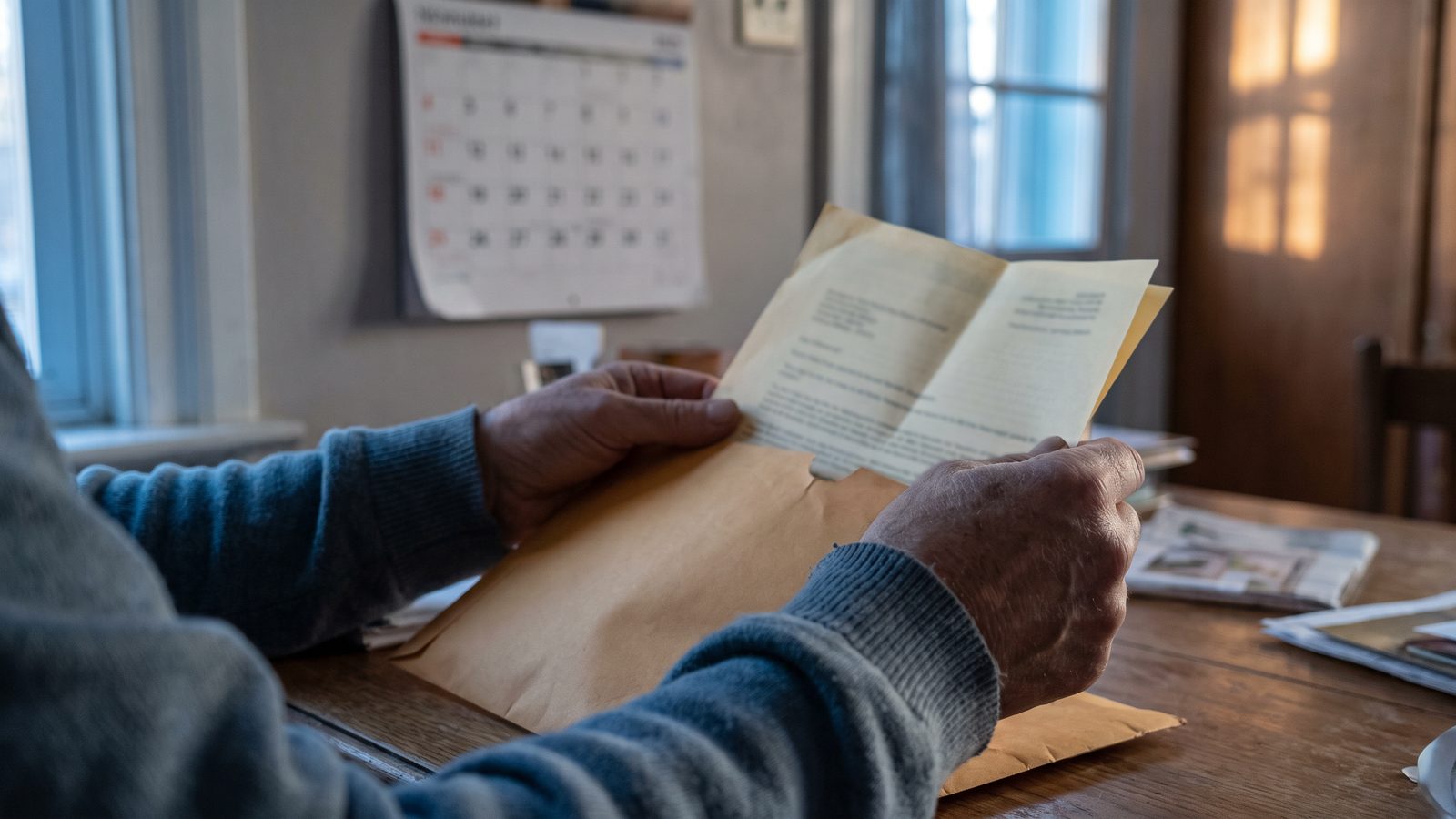
The summons is usually delivered by a court officer, on an ordinary day. It comes with a copy of the indictment, the name of the court and a short order: respond to the charges within the legal deadline. Many people put the paper in a drawer and wait “to be called to the hearing”. It is the most expensive mistake in criminal proceedings.
The response to the charges is not a formality. It is the defence’s first filing, the only one that comes before any hearing, and it shapes a good part of what the case will be about. This guide explains how the summons arrives, how to count the deadline, what the response must contain and when the case can end right there.
Indictment, summons and proceedings: what has happened so far
Before the summons, there was an investigation, usually a police inquiry. Based on it, the Public Prosecutor’s Office filed the indictment, which is the formal accusation. The judge, unless rejecting it at the outset, accepts the indictment and orders the accused to be summoned (Code of Criminal Procedure, art. 396). Once the summons is served, the proceedings are formally constituted (art. 363), and from then on the defence has deadlines running against it.
How the summons reaches you
- By writ: this is the rule when the accused is within the territory of the judge who ordered the summons (Code of Criminal Procedure, art. 351). The court officer hands over the copy of the indictment and certifies the act.
- At a set time: if the officer finds that the person is hiding to avoid being served, service is made “with a set time” (hora certa), at a time fixed in advance. If the accused still does not appear after that, the judge appoints a defence lawyer (art. 362).
- By public notice: if the accused cannot be found, they are summoned by public notice, with a 15-day period (art. 361). If, summoned this way, they neither appear nor retain a lawyer, both the proceedings and the limitation period are suspended, and the judge may take urgent evidence in advance and even order pre-trial detention (art. 366).
When the summons is by public notice, the 10-day deadline only starts to run when the accused appears in person or retains a lawyer (art. 396, sole paragraph). Anyone who discovers an old case in which they were summoned by public notice therefore has a window, but should not count on it for long: the suspension under art. 366 comes with the risk of pre-trial detention.
How to count the 10-day deadline
Deadlines in Brazilian criminal procedure follow their own rules, which differ from those of civil procedure:
- Calendar days: deadlines are continuous and peremptory, and are not interrupted by Sundays or public holidays (Code of Criminal Procedure, art. 798).
- The first day does not count, and the last day does (art. 798, § 1).
- If the last day falls on a Sunday or public holiday, the deadline moves to the next business day (art. 798, § 3).
- Year end: deadlines are suspended from 20 December to 20 January, except in cases with a defendant in custody, cases under the Maria da Penha Law on domestic violence and urgent measures (art. 798-A).
| If you were served on day | The deadline starts on day | It ends on day | Note |
|---|---|---|---|
| 10 | 11 | 20 | If day 20 falls on a Sunday or public holiday, it ends on the next business day (CPP, art. 798, § 3) |
| By public notice | Appearance in person or retaining a lawyer | 10 days later | CPP, art. 396, sole paragraph |
| Between 20/12 and 20/01 | Deadline suspended | Resumes running after 20/01 | Except defendant in custody, Maria da Penha Law and urgent matters (CPP, art. 798-A) |
In practice: write down the date on which you received the summons and contact a lawyer the same day. Ten calendar days go by quickly, and the lawyer needs that time to read the entire case file, including the police inquiry, before writing.
Which procedure applies to your case
The 10-day deadline applies to the ordinary and summary procedures. The procedure depends on the maximum penalty provided for the crime (Code of Criminal Procedure, art. 394):
- Ordinary: maximum penalty of 4 years or more. Each party may name up to 8 witnesses (art. 401).
- Summary: maximum penalty of less than 4 years. Up to 5 witnesses per party (art. 532).
- Fast-track: minor offences, with a maximum penalty of up to 2 years, tried in the Special Criminal Court. There the logic is different: the defence responds to the charges orally, at the opening of the hearing (Law No. 9,099/1995, arts. 61 and 81).

What goes into the response to the charges
In the response, the defence may raise preliminary objections and argue everything relevant to it, offer documents and justifications, specify the evidence it intends to produce and list its witnesses, identifying them and asking for them to be summoned where necessary (Code of Criminal Procedure, art. 396-A). In practice, a good response does four things:
- It attacks what is wrong in the case: nullities in the investigation, lack of just cause for the prosecution, defects in the indictment itself.
- It presents the defence’s account in the right measure, without disclosing what is better kept for the evidentiary stage.
- It files the documents that already show the other side of the story.
- It names the defence witnesses. This is the moment the law provides for doing so, and leaving it for later can mean losing the chance to have them heard.
When the case can end at the very start
After the response, the judge must summarily acquit the accused upon finding (Code of Criminal Procedure, art. 397):
- the manifest existence of a ground that excludes the unlawfulness of the act, such as self-defence (Criminal Code, art. 23);
- the manifest existence of a ground that excludes culpability, except lack of criminal capacity;
- that the facts described evidently do not constitute a crime;
- that liability to punishment has been extinguished, for example by the expiry of the limitation period (Criminal Code, art. 107, IV).
Summary acquittal only happens if someone shows the judge, clearly, that one of these situations is present. That someone is the response to the charges. A generic response, written only to meet the deadline, wastes the only chance to close the case before the evidentiary stage.
Agreements that may still be on the table
Not every case has to go all the way to judgment. Depending on the crime and the situation of the accused, the law provides negotiated ways out:
- Conditional suspension of the proceedings: for crimes with a minimum penalty of up to 1 year, the Public Prosecutor’s Office may propose suspending the proceedings for 2 to 4 years, with conditions such as repairing the damage and appearing in court every month, provided the accused is not being prosecuted for, and has not been convicted of, another crime (Law No. 9,099/1995, art. 89).
- Criminal settlement: for minor offences, the Public Prosecutor’s Office may propose the immediate application of a penalty restricting rights, or a fine, instead of a prosecution (Law No. 9,099/1995, art. 76).
- Non-prosecution agreement: this is made before the indictment. If you are still at the investigation stage, see ANPP: the agreement that closes a criminal case without a prosecution.
Whether or not to accept an agreement is a strategic decision: it ends the risk, but it has conditions and consequences. That conversation starts as soon as the indictment is read.
What if I do not respond?
The case does not stop. If the response is not filed within the deadline, or if the accused, once served, does not retain a lawyer, the judge appoints one to file it (Code of Criminal Procedure, art. 396-A, § 2). There is a defence, but you have not chosen who conducts it, you have not told your side of the story and, often, it lacks the documents and witnesses that only you could point to.
Frequently asked questions
Does being summoned mean I have been convicted?
No. The summons only informs you that there is an accusation and opens the period for the defence. The whole case is still to come, and the response to the charges is the first opportunity to change its course.
Can I write the response myself?
The response to the charges is a technical filing, submitted by a lawyer or a public defender. If you do not retain one, the judge appoints one (Code of Criminal Procedure, art. 396-A, § 2). Anyone who cannot afford to pay can go to the Public Defender’s Office.
I found out about an old case against me. Is there still time?
It depends on how you were summoned. If it was by public notice and you never appeared, the case may be suspended, and the deadline for the response only runs from your appearance or from the moment you retain a lawyer (Code of Criminal Procedure, arts. 366 and 396, sole paragraph). A lawyer can check the exact situation in the file before any step is taken.
I live outside Brazil. How do I respond?
Your defence lawyer can be appointed under a power of attorney, and the deadline works the same way. See what changes for people who live abroad in summoned in a Brazilian case while living abroad.
What to do with this information
Take the summons and write down three things: the date you received it, the case number and the court. Count 10 calendar days starting the following day and mark it on the calendar. Then send the copy of the indictment to a lawyer the same day. On our criminal law page you describe the case in a few lines, and the firm replies with priority when a deadline is running.
Sources: Code of Criminal Procedure (Decree-Law No. 3,689/1941), arts. 351, 361, 362, 363, 366, 394, 396, 396-A, 397, 401, 532, 798 and 798-A; Criminal Code, arts. 23 and 107; Law No. 9,099/1995 (Special Civil and Criminal Courts), arts. 61, 76, 81 and 89. Texts checked against the updated version published by Brazil’s Chamber of Deputies on 14 November 2026. Informational content; not legal advice.

is a lawyer admitted in Brazil (OAB/RJ 113.775). This article is informational and does not constitute legal advice on any specific matter. Brazilian law matters are handled from abroad under power of attorney; matters of United States law are conducted with a US-licensed attorney.
Facing a criminal matter in Brazil?
Answer below and I will then help you pick a time for us to talk through your case.